
Worksop
Bassetlaw Emergency Care Village
Client
Location
Worksop
Sector
Healthcare
Scope of Works
Project Overview
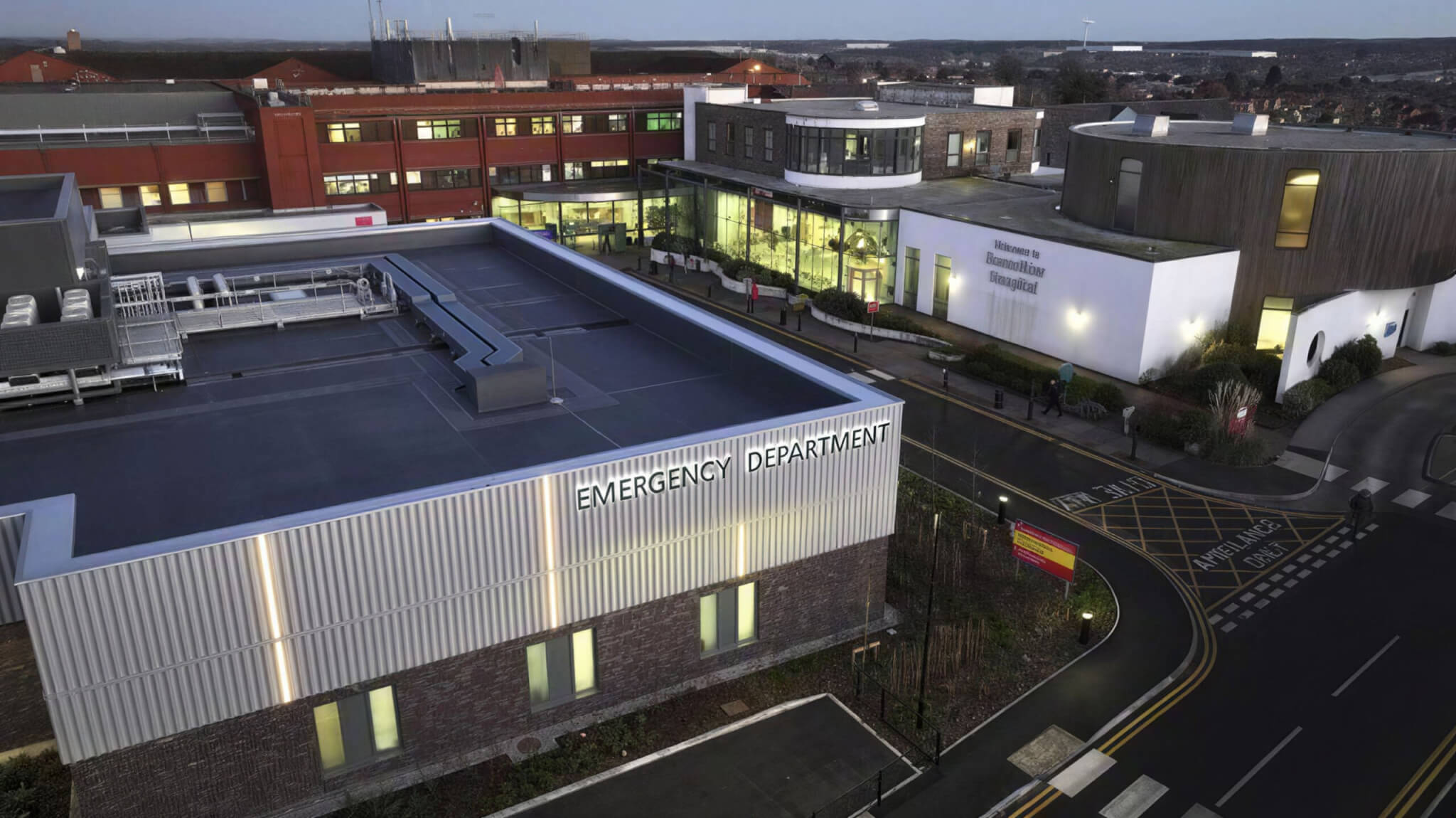
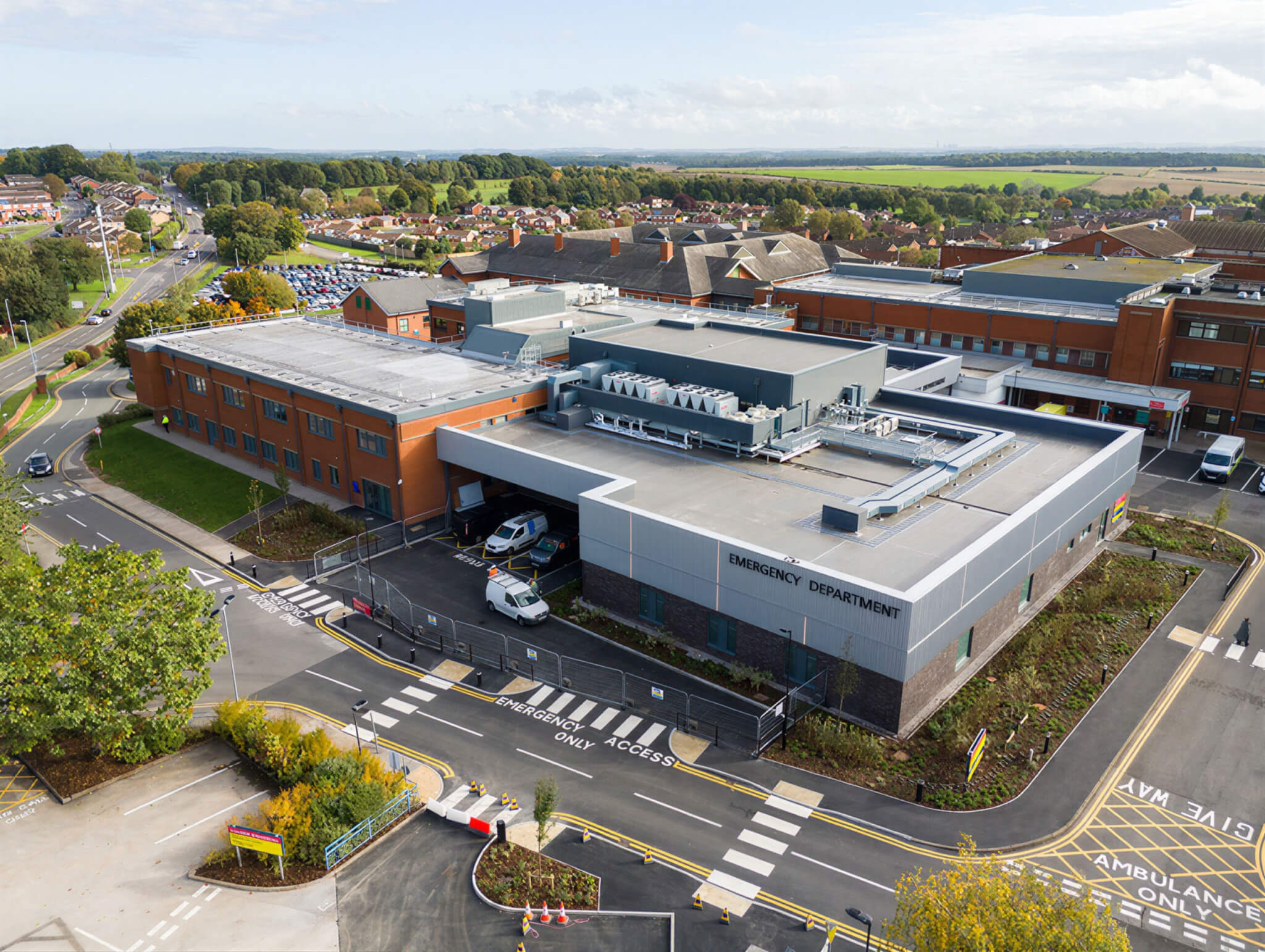
Bassetlaw Hospital set out to build an Emergency Care Village: a larger emergency department with the assessment and treatment space to match. The challenge was that none of the existing services could pause while it happened. The live ED kept treating patients, blue-light ambulances kept arriving on their existing routes, and an outpatient endoscopy unit kept running, all on a working hospital site.
CAD21 was appointed through the NHS Trust in January 2021 as part of the design team, taking the scheme from a RIBA Stage 2 business case through to completion in December 2024, with full building services designer duties at every stage. It came in two halves. A new-build extension housing the emergency department, with resus, majors and minors, and a refurbishment of the redundant mental health wards into a new Child Assessment Unit and Acute Treatment Centre, with new services run throughout, RAAC roof panels replaced, and the lot tied back into the main hospital infrastructure.
THE CHALLENGE
Healthcare design runs to the NHS Health Technical Memorandums, which set the criteria for ventilation, electrical supplies, medical gases and everything else. Meeting them in a new building is one job, meeting them inside an old one that has to keep running is another.
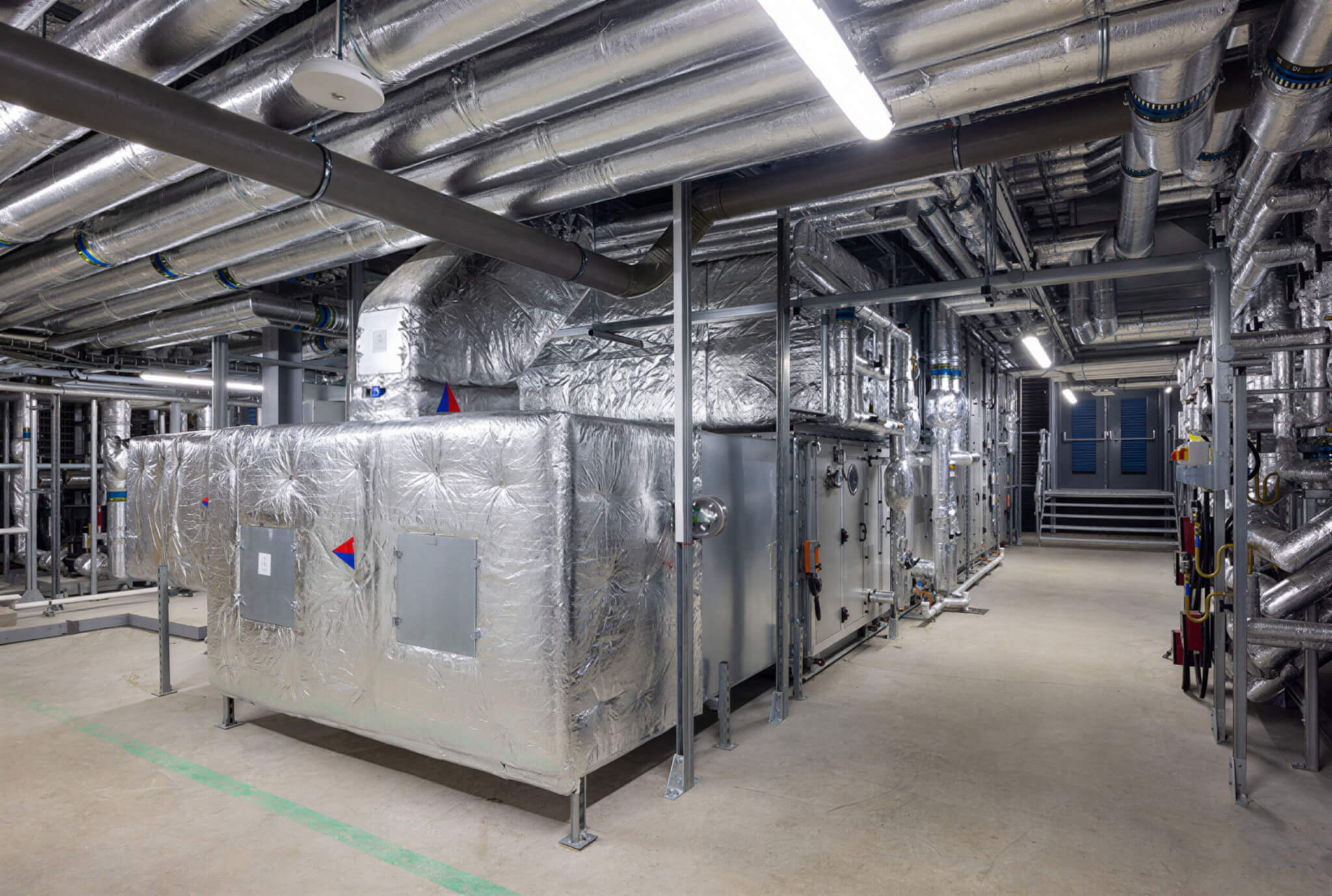
The live endoscopy unit was the knot at the centre of the whole project scope. Sitting within the old mental health building it shared services with the very spaces being converted to the CAU and ATC, so the new design couldn’t be untangled from the running one without knowing exactly what fed what. Electrical capacity was the next pressure; the new heat pumps and the change of use pushed the load past what the site could supply, which meant upgrading the hospital’s capacity, adding a new HV substation onto the ring, and diverting the existing ring main clear of where the new building would sit. Then there was space; an old building gives you tighter ceiling voids and less room to route services than a new one, so every new run had to be threaded through what was already there, against real limits on the rooms below.
THE SOLUTION
The answer to most of all this was finding out what was actually there before committing to a design. At Stage 2 we ran site visits to trace the primary connection points, check the ceiling voids and find where plant could go. Knowing where a consultant’s reach ends, we also produced a detailed intrusive survey schedule, electrical testing, air and water flow measurement that went out to specialists for the physical investigation.
That early picture changed how the rest could be planned. Once the shared services around endoscopy were understood, the Estates team set a single controlled shutdown: one week to change the LTHW heating connections and relocate the air handling plant, with the unit back in use after that so disruption became one planned window instead of a risk hanging over the whole build.
Fixing the design early mattered for another reason. At an old hospital the regulations have moved on over the years, so the design carried genuine compromises that the Trust’s independent Authorising Engineers had to sign off. Working those through at Stage 2, with the Estates and clinical teams in the room, settled them before they turned into abortive work at Stage 4. Alongside that, early engagement with MEP contractors through the framework, and cost planning with the QS, EdgePS, gave the Trust a realistic price while the design was still moving. On the existing fabric, we worked with the architect on window upgrades and added insulation, balancing what each gained against the room volume it cost and the return on the spend.
At PCSA the team trimmed the programme by doing the installation modelling and drawings for the MEP contractor, using off-site modules and pre-fabricated plant sized to fit the existing building’s constraints.
Energy
NHS England didn’t mandate a net zero in operation pathway for Bassetlaw, but the Trust wanted one, and the energy thinking ran through the same decisions rather than sitting beside them. The new ED runs on air source heating with roof-mounted PV, and demand-led control keeps the clinical spaces from conditioning themselves when no one’s in them. The refurbished building still takes its heating from the main hospital’s gas boiler through a hydraulic interface unit, but the power connections and pipework were sized so it can switch to its own heat pump when funding comes, and its older plant was made more efficient through enhanced controls and better fans and motors. The full pathway is documented and costed, with the affordable measures built in now and the rest ready to follow. The scheme reached BREEAM Excellent on the new build and BREEAM Very Good on the refurbishment, with carbon down 20%.
THE RESULT
Completed in December 2024, the Emergency Care Village gave Bassetlaw a new emergency department and reprovisioned child assessment and acute treatment space, all delivered around a hospital that stayed open the whole time.